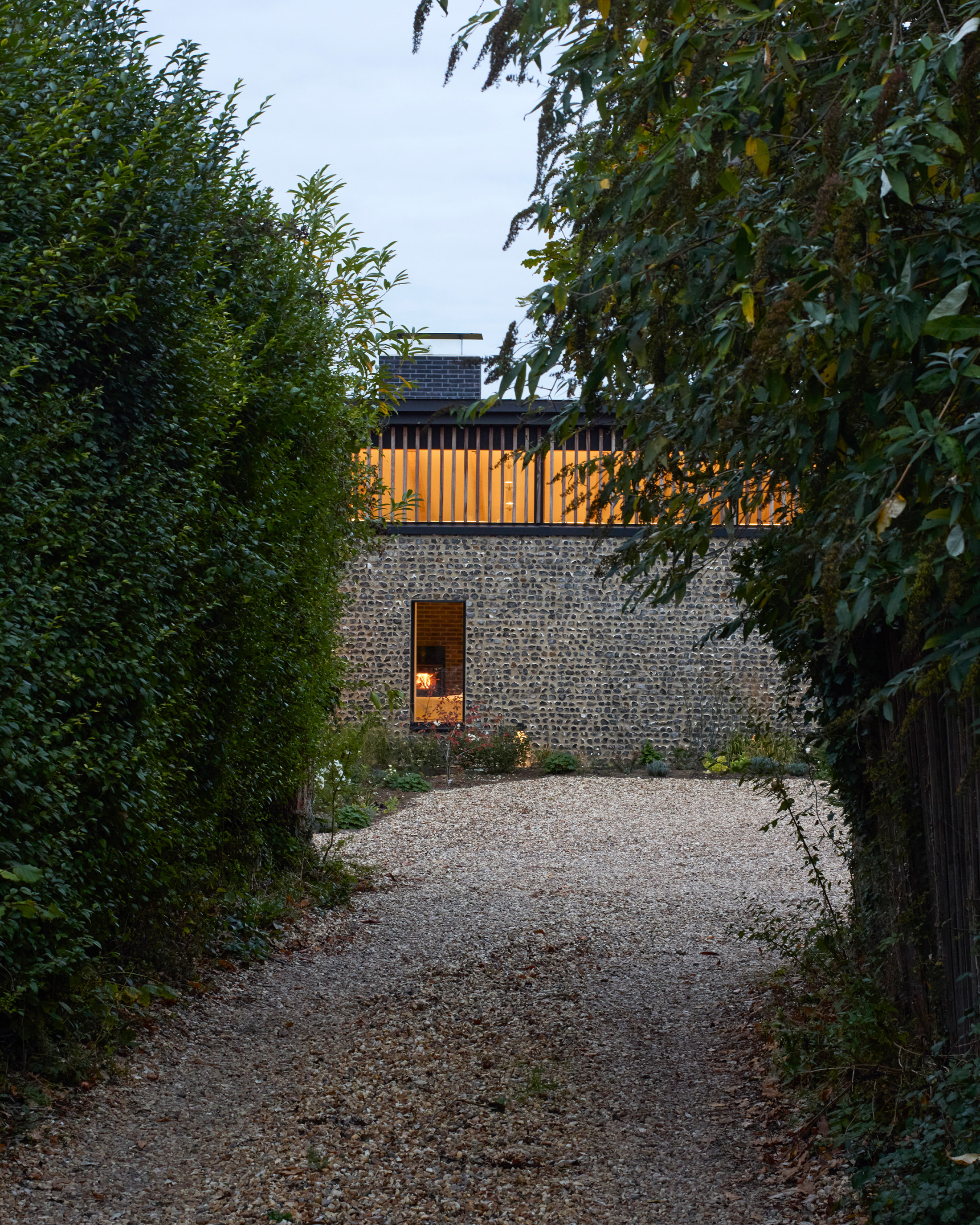
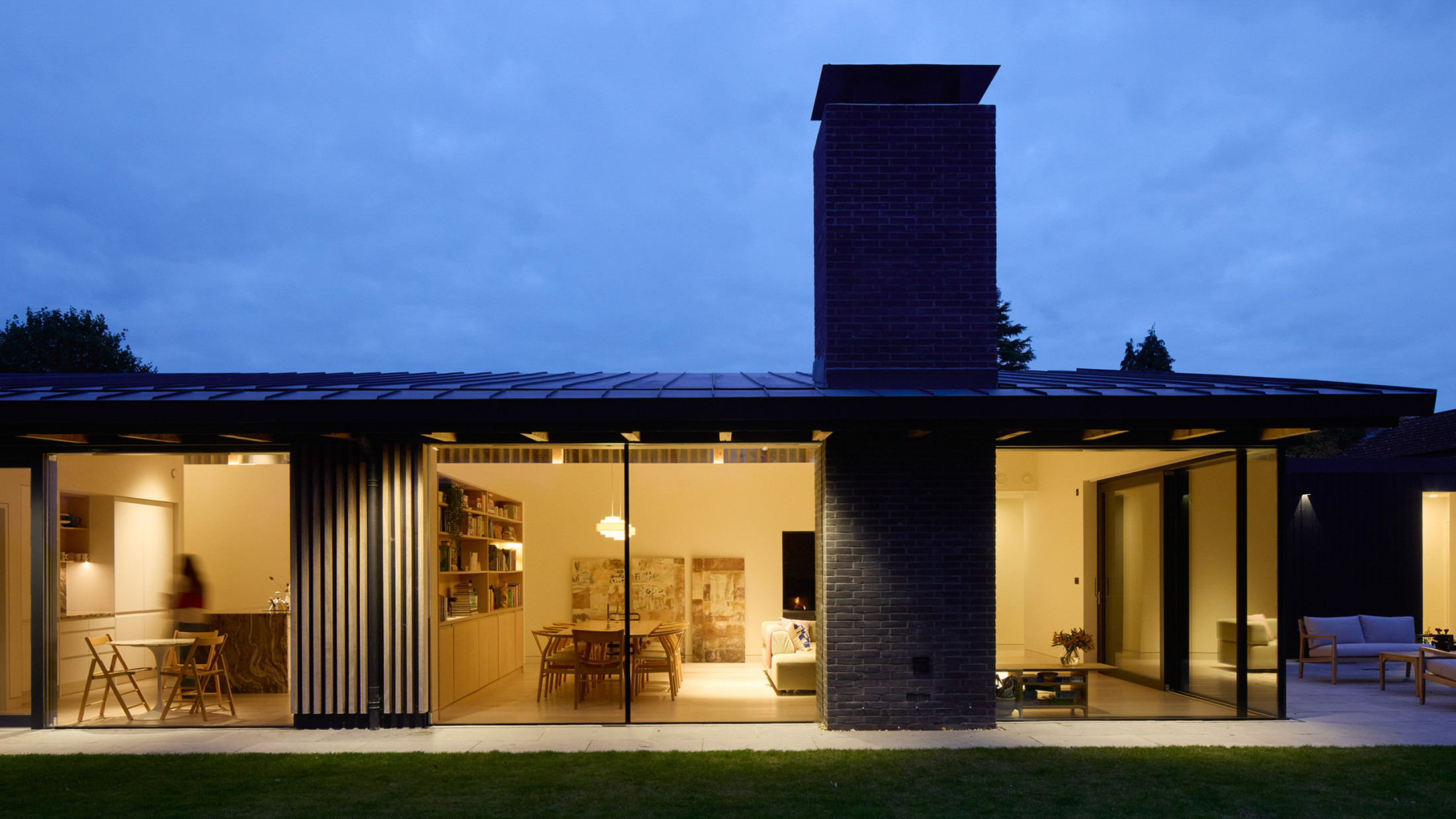
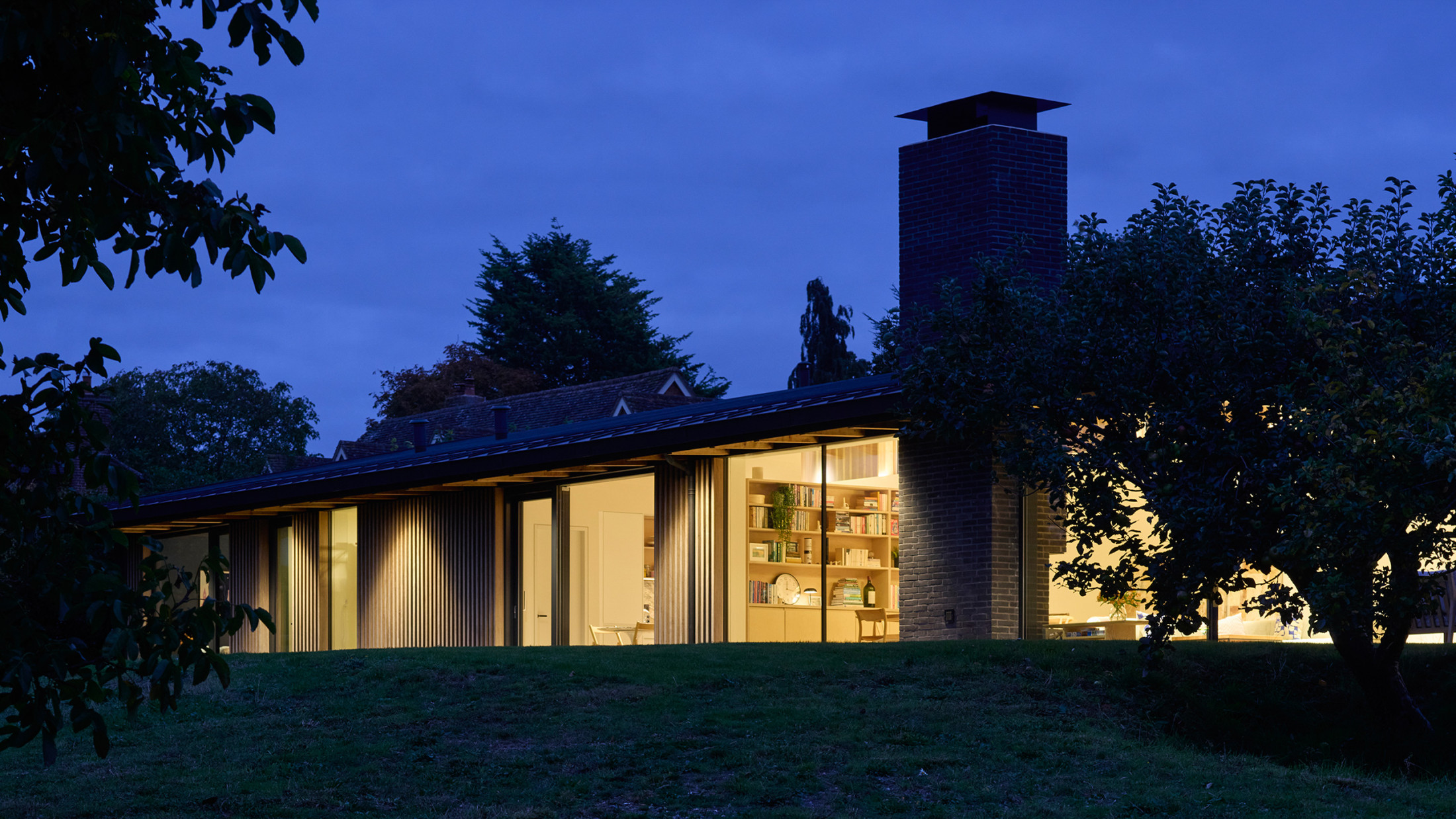
This project for a four-bedroom replacement dwelling sits on a lovely back-land site behind the High Street of Kintbury in Berkshire, with views north to the Kennet river and west across open meadow land. The site was constrained by a Village Settlement Boundary line that meant only the southern third of the site could be built on, a significant constraint given the proximity of surrounding buildings.
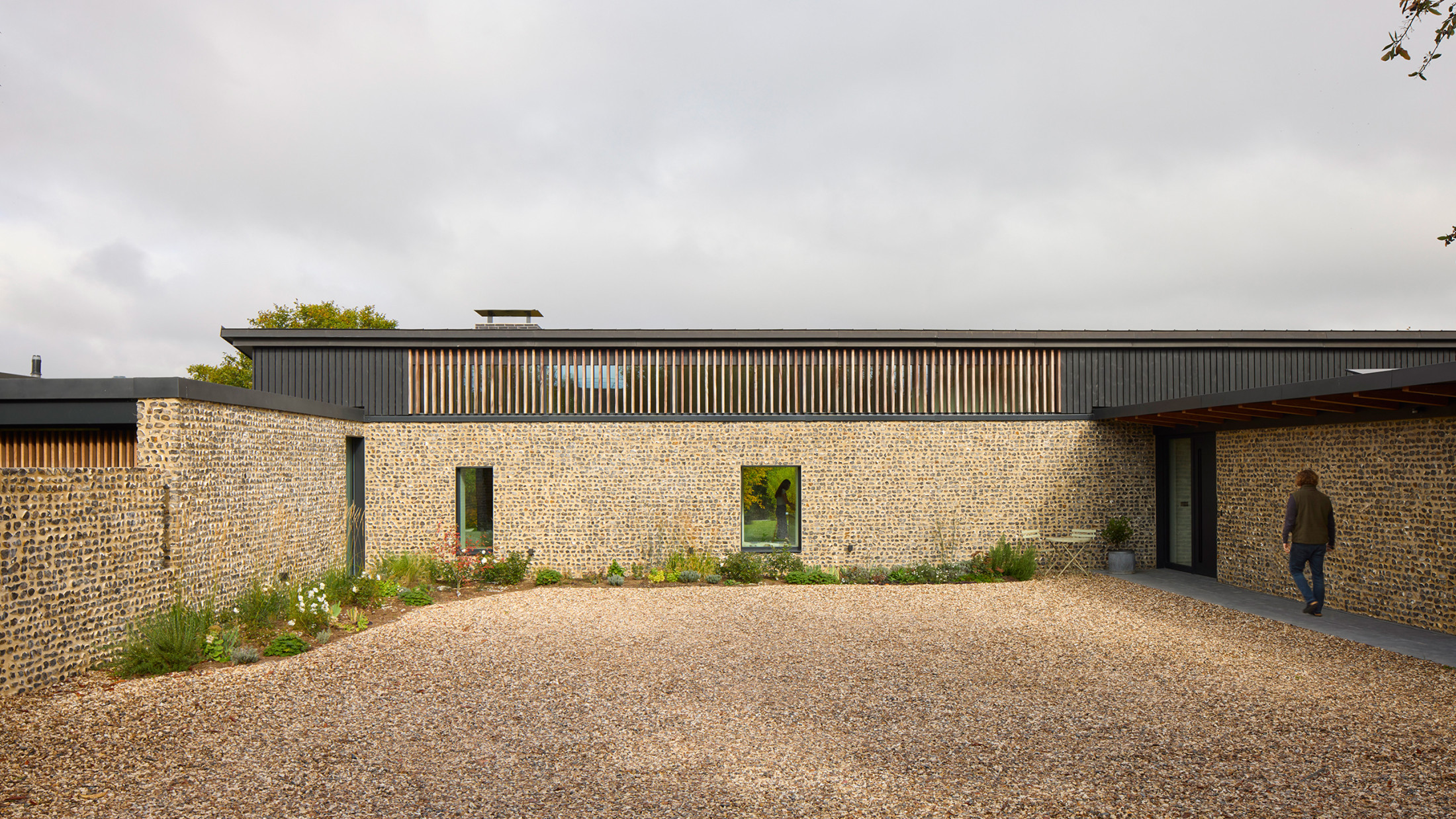
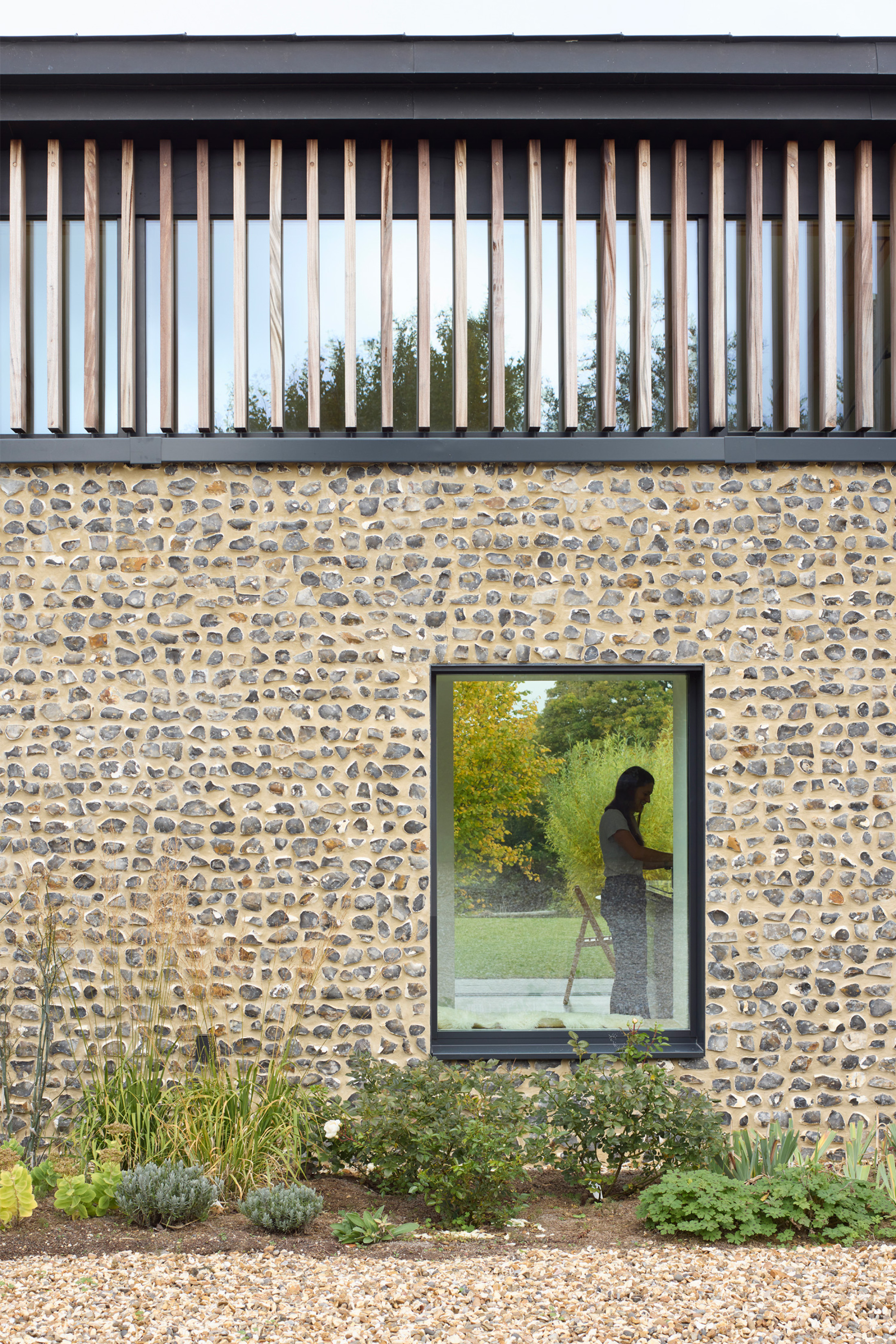
The site is approached down a long narrow driveway, discreetly tucked behind a quaint high street terrace. The design set out to foster and exaggerate this sense of arrival, creating a plan that enclosed a square entrance court at the end of the drive. The home is planned around the three flint walls that form the courtyard, with apertures in the walls offering glimpses into the domestic scenes within, and wider landscape beyond. The three linked wings are all single-storey, minimising it’s mass against the predominantly two storey context, with only the larger central volume rising above the flint wall, a veil of timber fins and black stained cladding hinting at the home beyond.
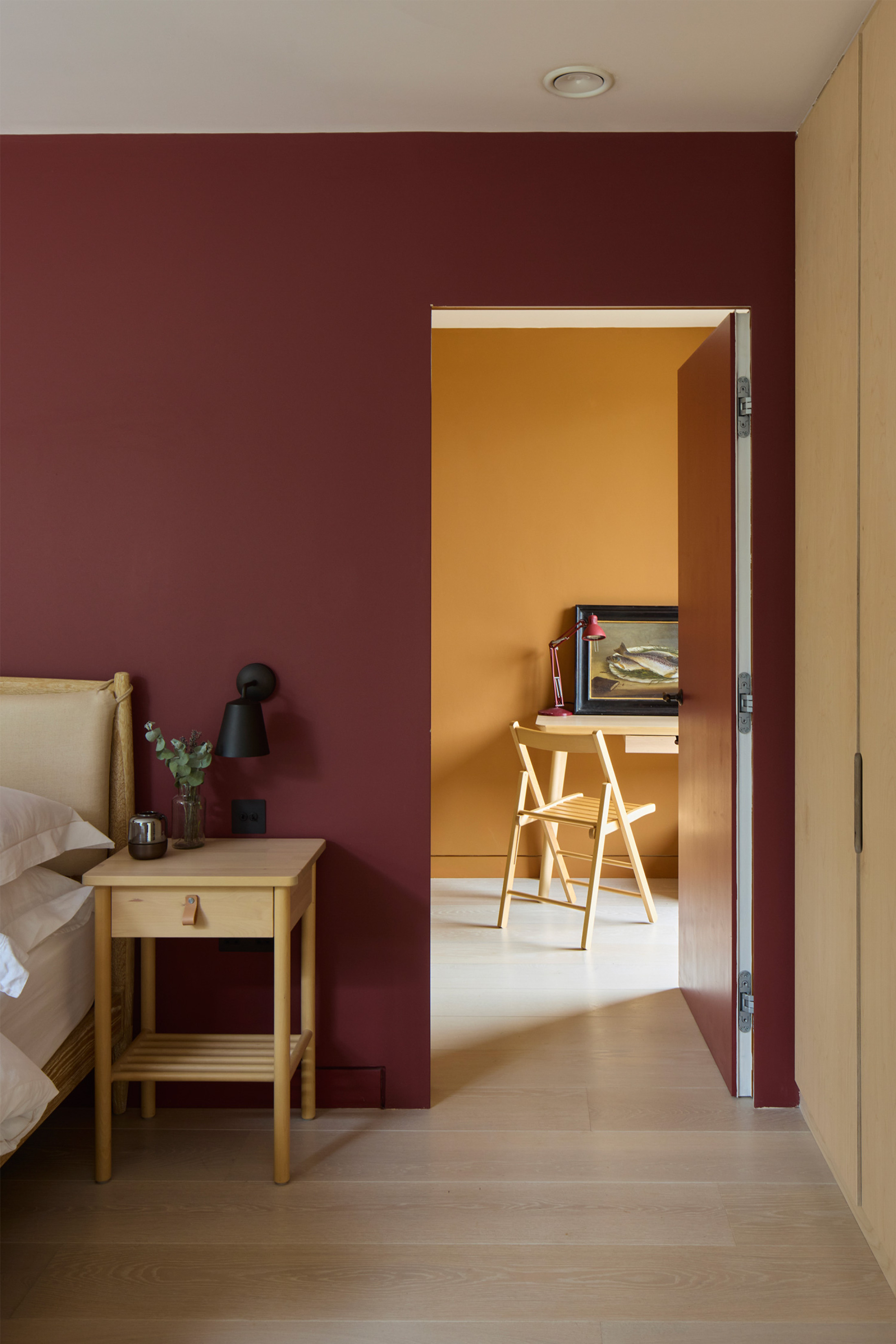
The cluster of volumes divide the house into three distinct uses; a guest wing with ensuite, snug and garage to the east, a bedroom wing with the principle bedroom and two children’s bedrooms to the west, and a large mono-pitched volume connecting the two, housing the primary living spaces, office, family room and utility. The front dooropens into a glazed link between the living and guest wings, with a secluded courtyard and single acer tree beyond.
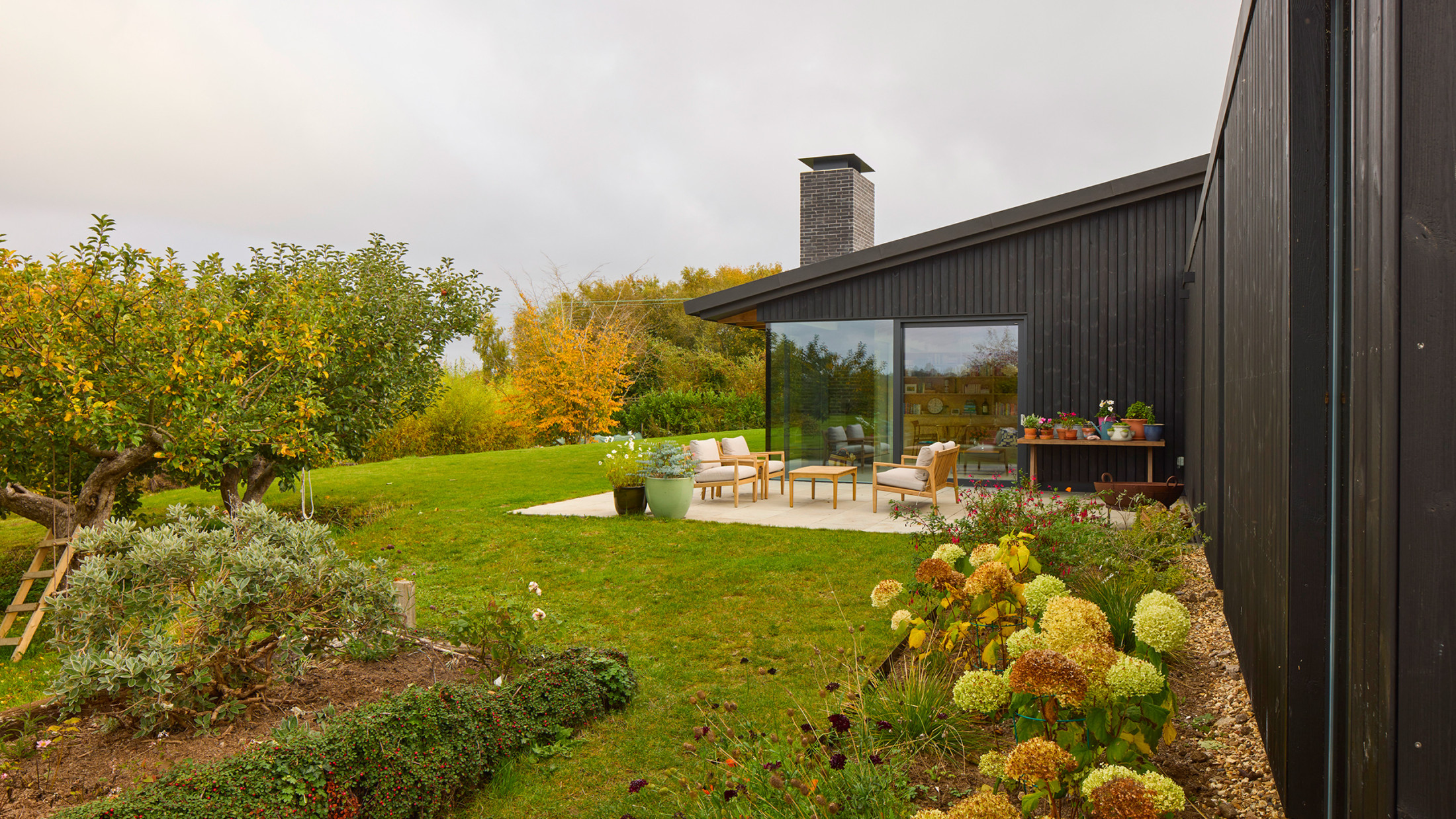
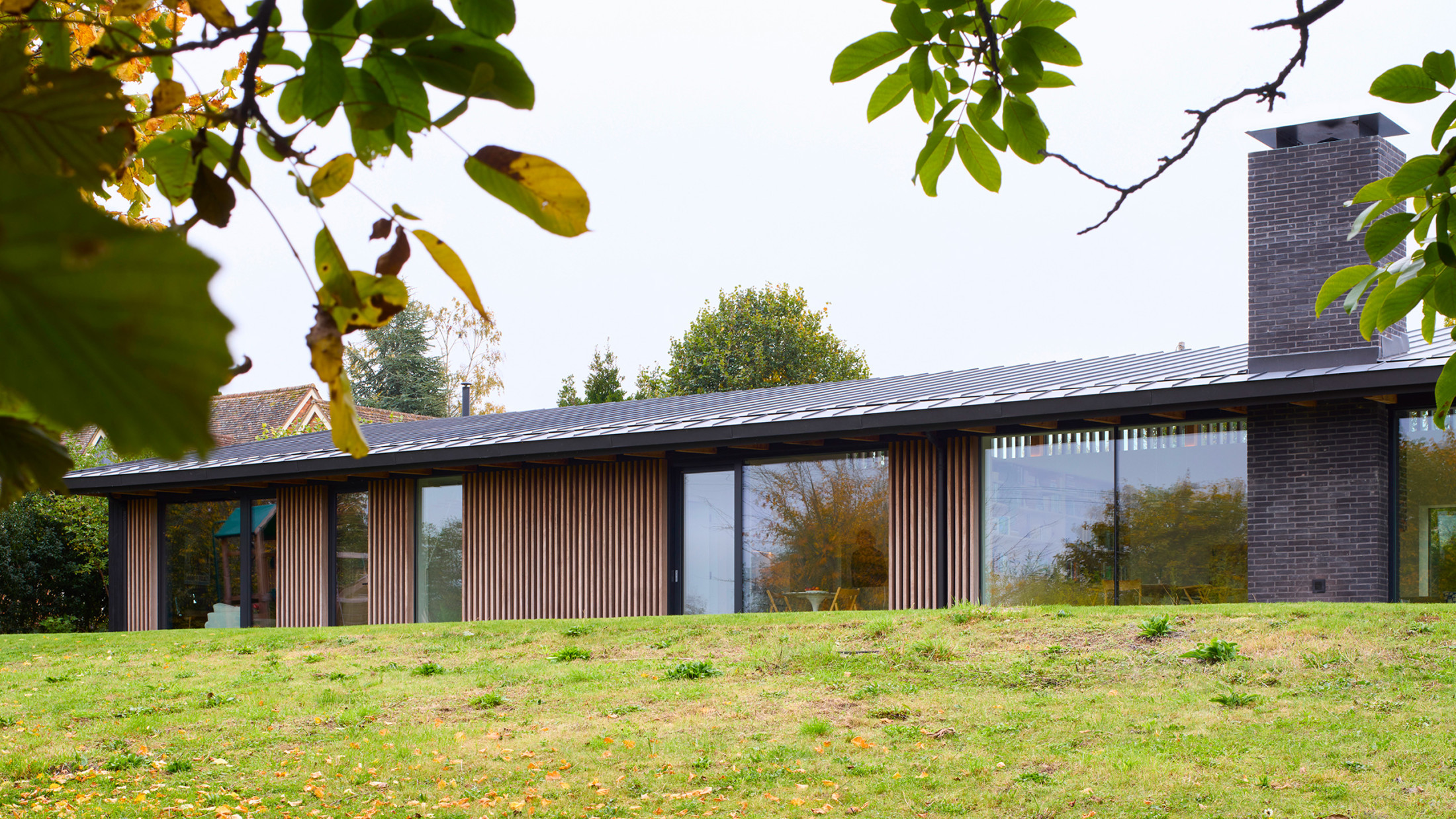
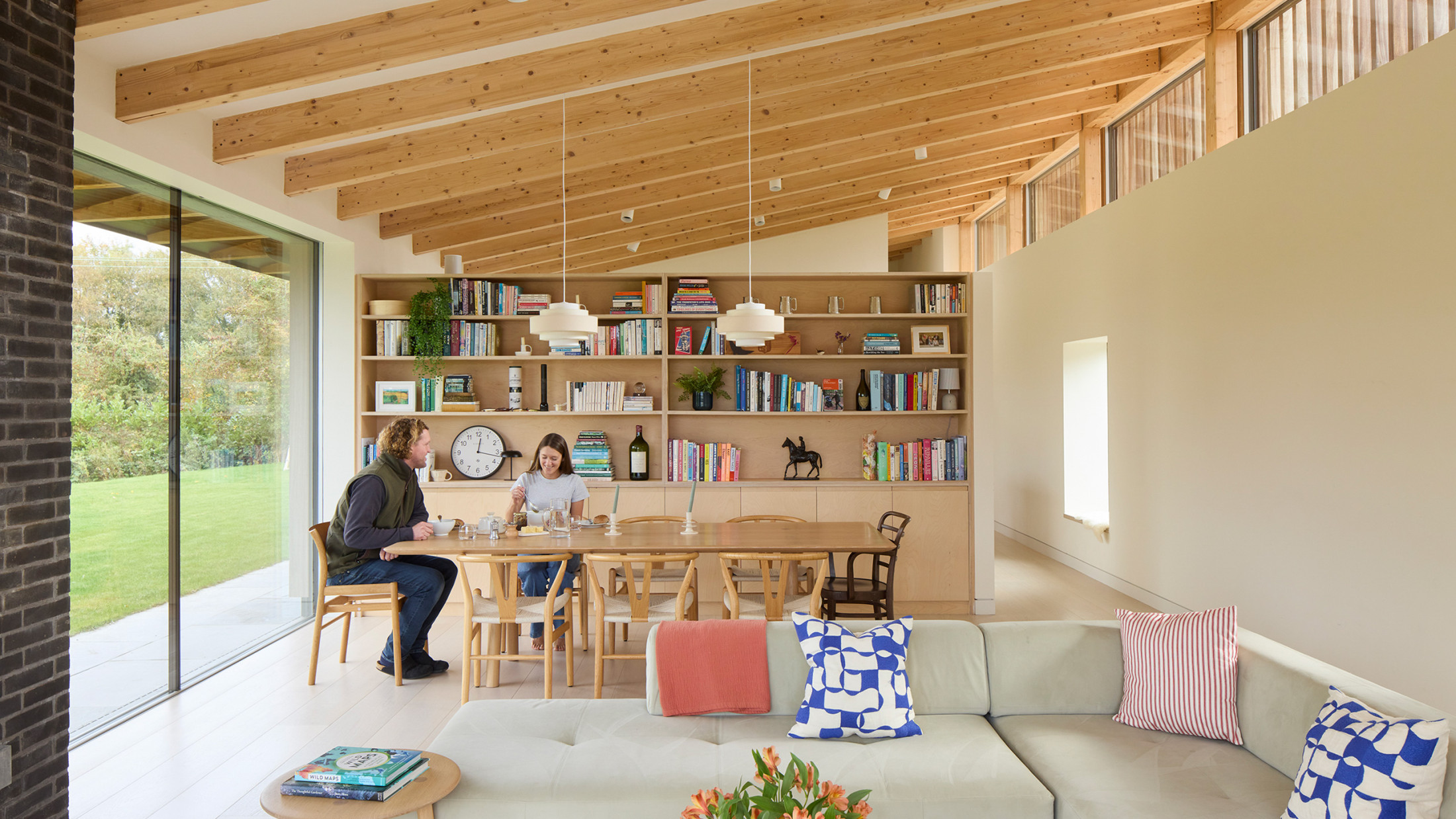
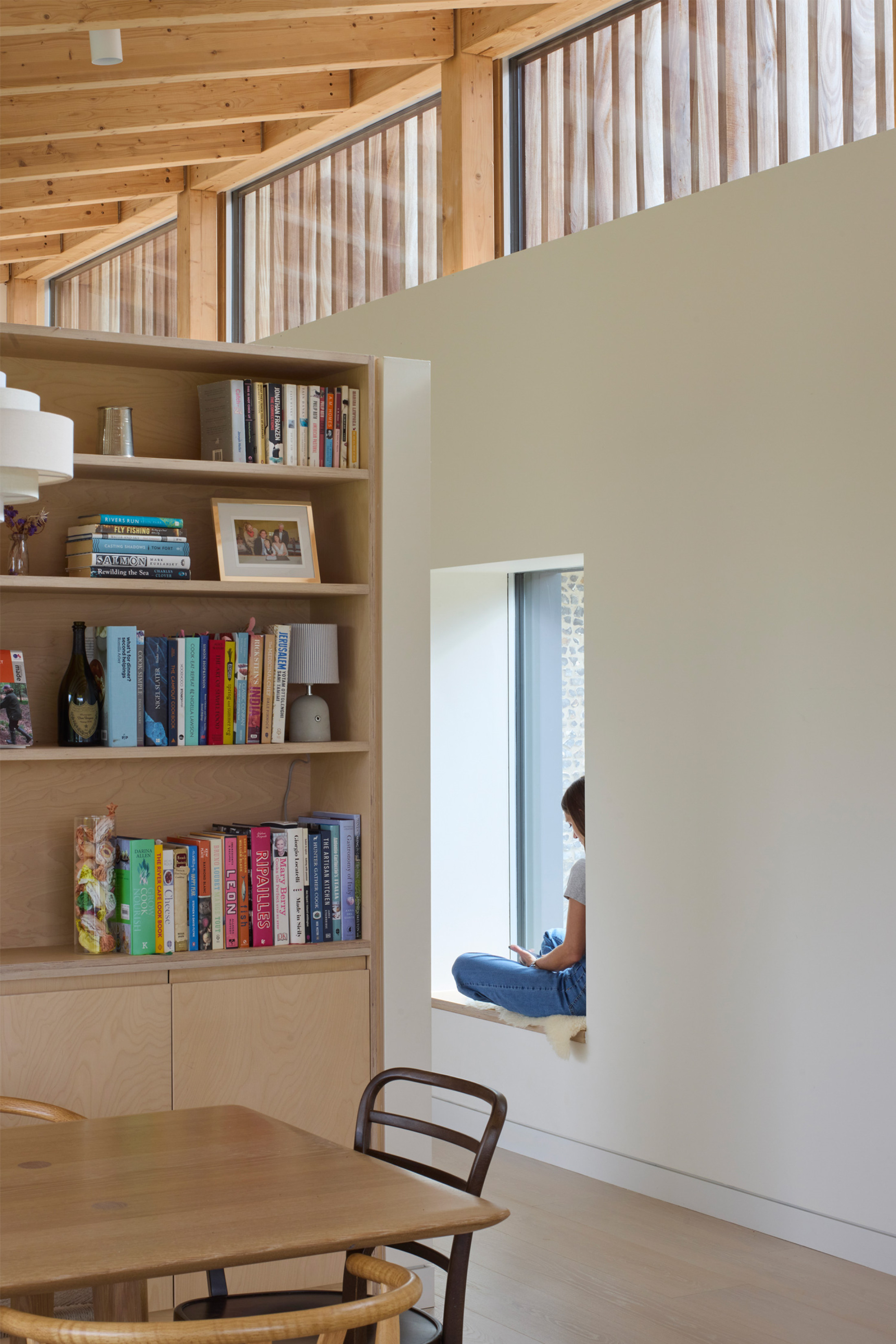
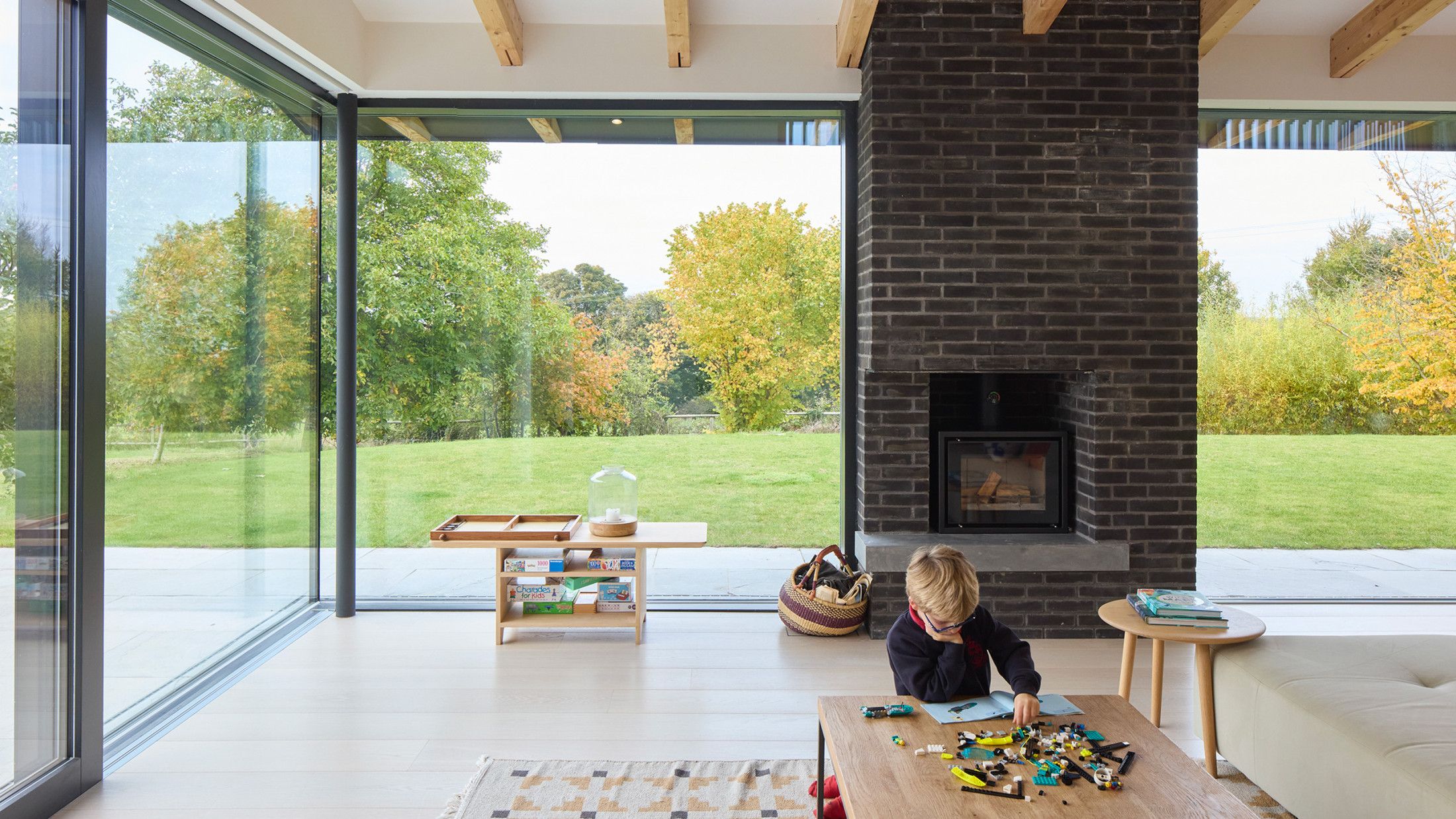
The living wing sits within an open roof structure with exposed glulam timber beams and high-level clerestory windows bringing sunlight into the north facing room. Vertical louvres over the clerestory bring animation as the shadows make their passage across the room. The north and west elevations are predominately glazed, offering access to the wildflower meadow garden and long views towards the Kennet and Avon canal. A brick chimney adds counterbalance within the wall of glazing and provides the hearth to gather around on cooler winter nights.
With sustainability a key factor in the brief, the house is constructed using an off-site timber frame, high levels of insulation, passive shading methods and sustainable technologies, including PV, MVHR and air source heat pump. Natural materials are used where possible, with thermally treated pine cladding, Iroko louvres, flint walling and timber composite triple glazed windows.